
Project
Packing silos for sea freight to the USA
The silos were shipped to the USA by sea, and the voyage took about 1.5–2 months. We prepared them for a customer in the cosmetics industry. On such a long journey, protection against rain is not enough. So when packing the silos for sea freight, we combined several types of protection, and finally the silos went into crates.
Why is a long voyage dangerous for metal?
In sea freight, water from outside is not the only danger. Cargo packed in ordinary film can arrive rusty even though not a drop reached it from outside. The water is already inside: in the timber, in the air sealed in with the cargo and in condensation.
According to the CTU Code, the IMO, ILO and UNECE code of practice for packing cargo transport units, the risk of steel corrosion rises from as little as 40% relative humidity. Timber considered dry (12–15% moisture content) sets the humidity of the air in a closed container at about 60–75%. A container standing on deck can change temperature by more than 25°C within a day. The vapour then condenses on the walls and ceiling and drips onto the cargo.
The insurer TT Club’s data shows this. In 2020, sea freight accounted for 65% of reported water damage claims. TT Club attributes this to the length of the voyage and the climate zones the cargo passes through.
How long the transport to the USA took
About 1.5–2 months. The longer the cargo is in transit, the longer the moisture sealed inside the packaging affects it. No barrier foil enclosure is 100% airtight, so the desiccant has to last for the whole journey.
How do you protect a silo for sea freight?
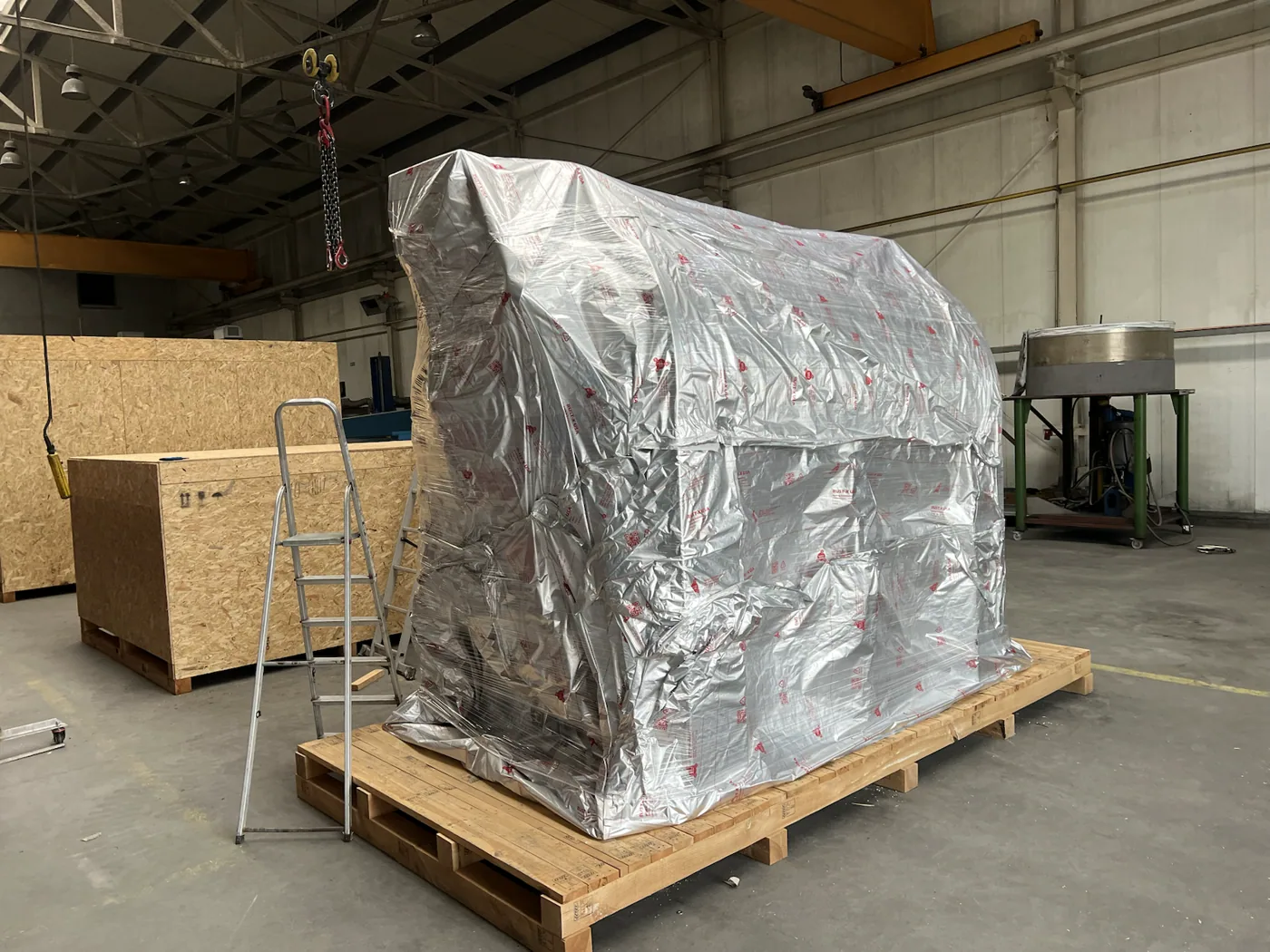
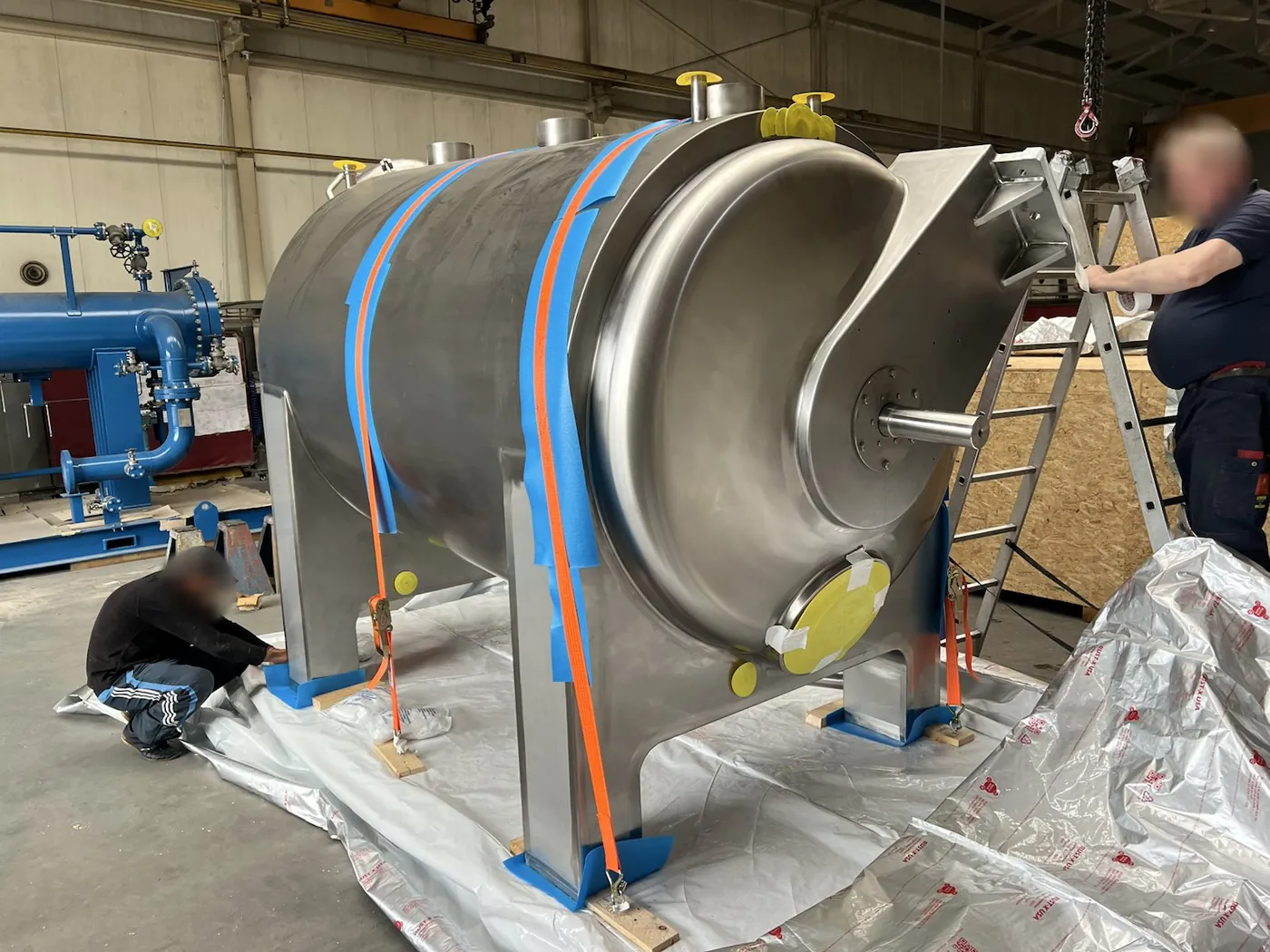
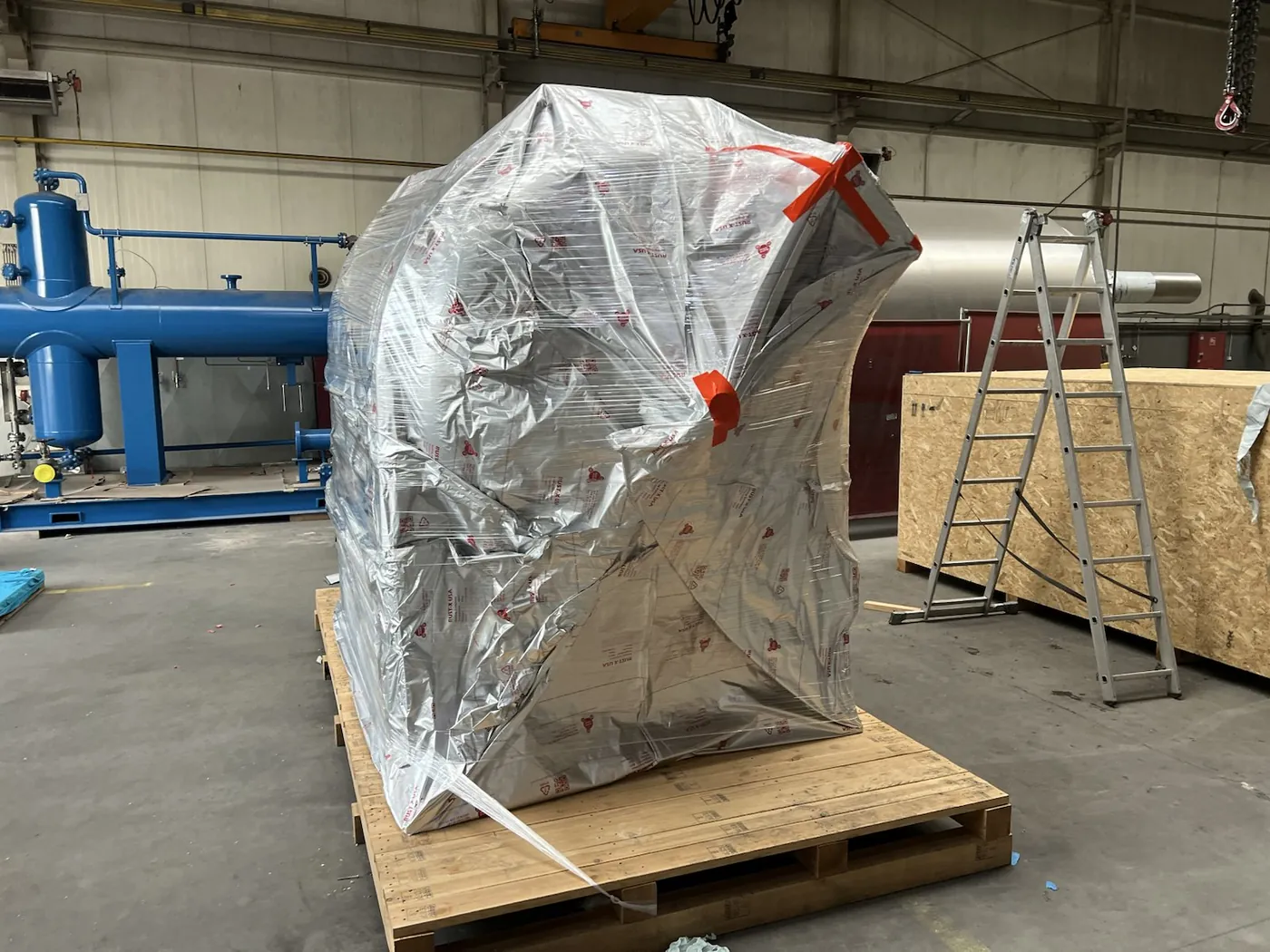
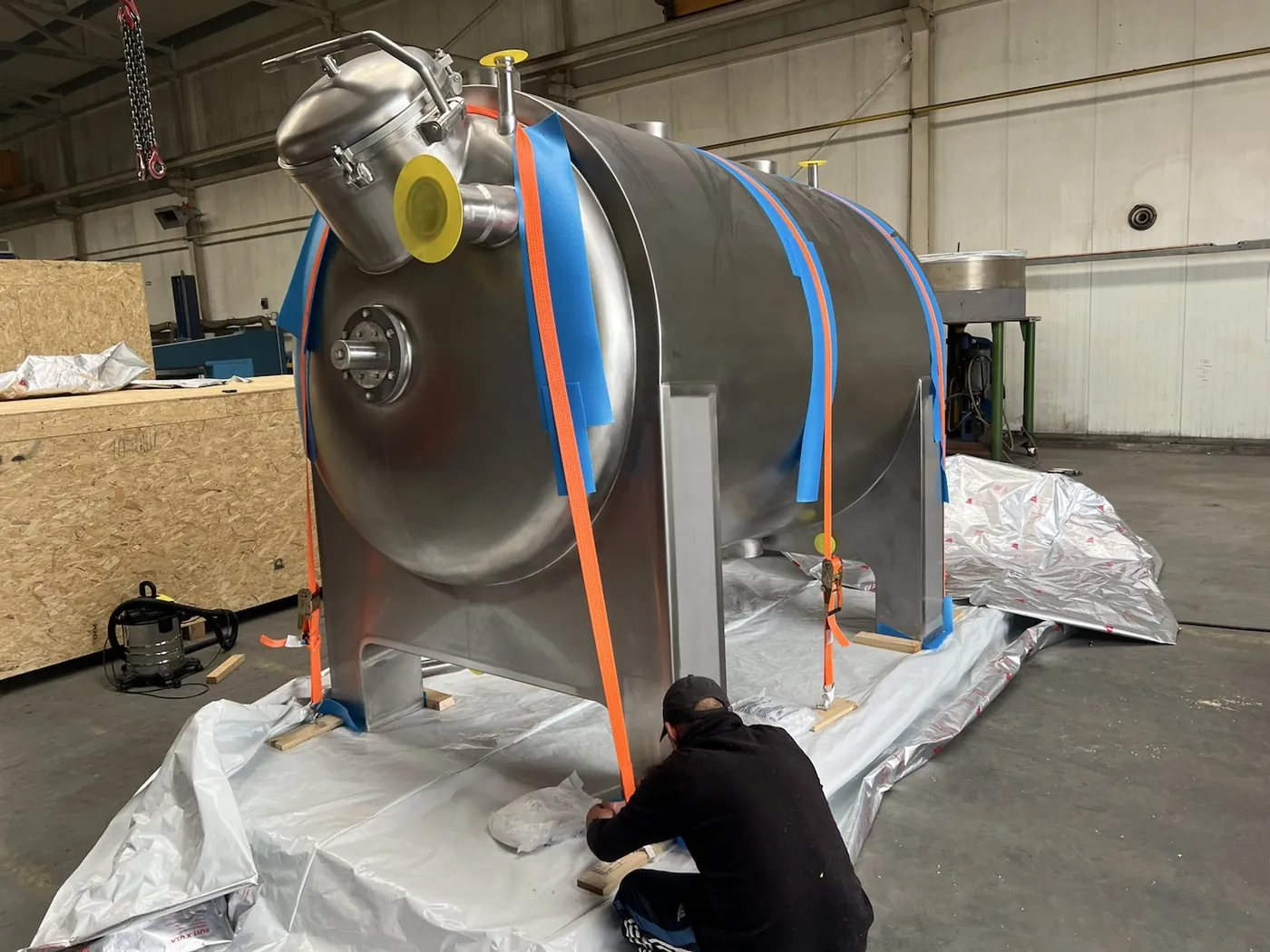
The silo packaging included desiccants, corrosion inhibitors, VCI sheets and aluminium barrier foil. We wrapped everything in stretch film, strapped the silos to the pallets, and then they went into crates.
Each of these does a different job. VCI is a volatile corrosion inhibitor: it is released from its carrier and settles on the metal as a thin, invisible layer that slows rusting. It only works in closed packaging, and it does not need to be removed after unpacking.
Aluminium barrier foil lets almost no water vapour through. According to GDV, a laminate with an aluminium layer lets through about 0.1 g of vapour per m² per day, four times less than ordinary PE film in a temperate climate. The barrier on its own does not protect the metal, because it does not remove the moisture left inside. That is what desiccants are for: they bind the moisture sealed in the packaging.
Straps fastened to the pallet hold the silo in place. The IRU guidelines list this among the shipper's obligations. The goods must be secured within the load unit so that they do not move inside the packaging during transport.
The first photo shows a silo in silver barrier foil on a pallet, with an OSB board crate beside it. The second shows the same type of silo before packing, with the foil spread out beneath it.
Barrier foil or VCI?
For these silos we used both, because they protect in two different ways. VCI protects the metal actively, while barrier foil with a desiccant protects it passively: it keeps the inside dry.
How do you prepare a similar load for a quote?
We pack export cargo under cover, almost always indoors at the customer's site (approx. 98% of jobs). We come with the film and equipment, so the cargo does not need to be brought to us.
For a quote we need five things:
- the dimensions of the cargo (length, width, height),
- the address and type of the storage location,
- the loading or departure date,
- a few photos from different sides,
- the destination country and the approximate time in transit.
For sea shipments, the destination country and the time in transit determine whether internal moisture protection is needed and what kind. Materials for this kind of protection are also available in the shop: desiccant, VCI anti-corrosion paper and aluminium barrier foil with VCI.
Our part is the packaging. We do not provide transport, we do not secure cargo on the ship, we do not mark timber with the IPPC mark and we do not declare the container mass (VGM). After each job, we draw up a handover report with the customer, signed by both parties: what we packed and when. We describe the full scope on the page packing for sea freight and export. The dimensions, storage location and shipping date are the minimum we need to quote for packing your cargo.
FAQ
Frequently asked questions
What is placed under the barrier foil?
In this project, the packaging included desiccants, corrosion inhibitors, VCI sheets and aluminium barrier foil. In general, a desiccant is placed inside a sealed barrier foil enclosure, because the barrier itself does not remove the moisture sealed inside. Where possible, timber should be kept outside the enclosure, because it brings the most water into the packaging. The desiccant is hung so that it does not touch the metal, because a saturated desiccant in contact with the goods increases corrosion.
Does the silo travel in a crate?
Yes, the silos finally went into crates. When exporting outside the EU, keep the timber in mind: the IPPC mark (ISPM 15) applies to solid wood packaging such as pallets, skids and wedges. It does not cover plywood, chipboard or OSB.
Who secures the cargo in the container?
According to the CTU Code, the ‘packer’, i.e. whoever loads the container, is responsible for stowing and securing the cargo in it. This may be the shipper. That is why, before shipping, it is a good idea to agree in writing who packs the cargo, who loads and secures it in the container and who declares the container mass.
Have a similar load?
See what packing for sea freight and export involves, or give the dimensions, storage location and planned date in the quote calculator. You can also call: +48 605 525 882.
Similar projects
See also
 Six machines in one dayDelicate electronics inside, a journey to the other end of Europe, six machines in one day.See project
 Sauna for a customer from GermanyExterior protected with oil at the request of a customer from Germany, low-loader trailer.See project
 House with a finished facade, up to 14 m longUp to 14 m long and over 4 m wide, facade protected on the way.See project